Services
We build it, then we look after it.
Most pond problems arrive years after the build, which is why it matters that the people who dug it are still on Route 94 when you call. Everything below is work we do ourselves.
Not sure what you need? Call 973-209-1185 and describe the problem. We would rather tell you it is a $12 part than sell you a service call.
New builds
Design & installation
Six different things people mean when they say “I want a pond.” Each one links to a page explaining how it actually works.
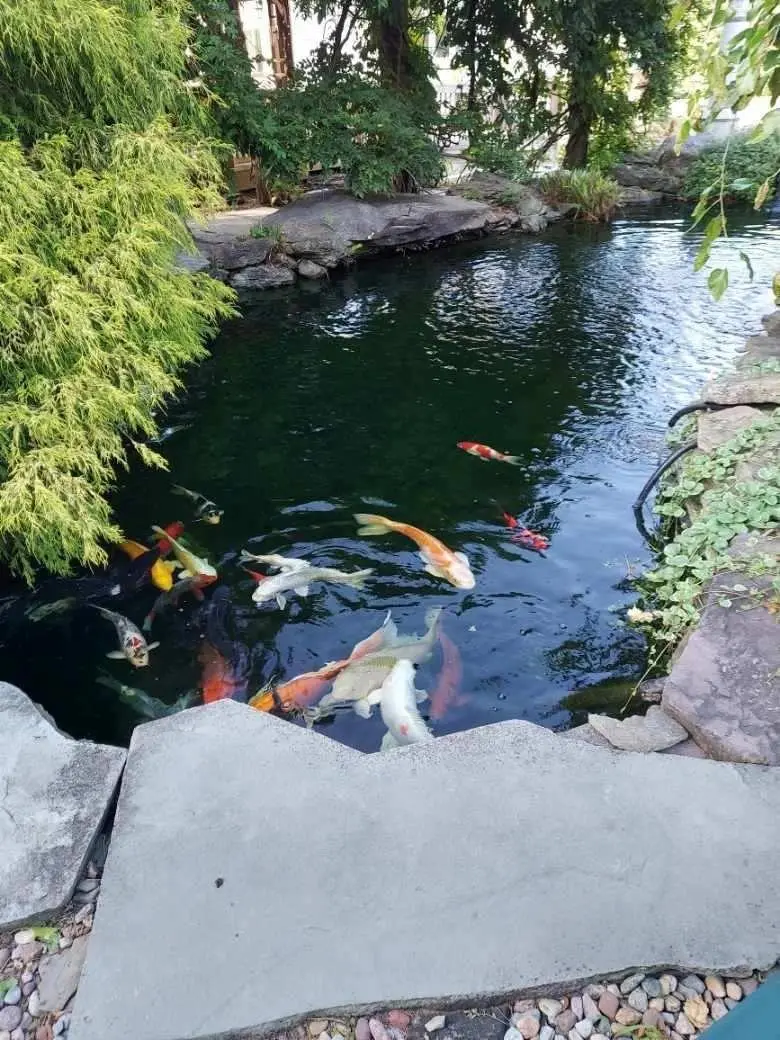
Koi ponds
Livestock life support with a landscape around it. Built to 4 ft in our climate, with a bare sloped floor, a bottom drain, and filtration sized to the fish rather than the surface area.
- Bottom drain and settlement — waste actually leaves the pond
- 1–2× turnover per hour, mechanical filtration before biological
- Depth that survives a Sussex County winter and defeats a heron
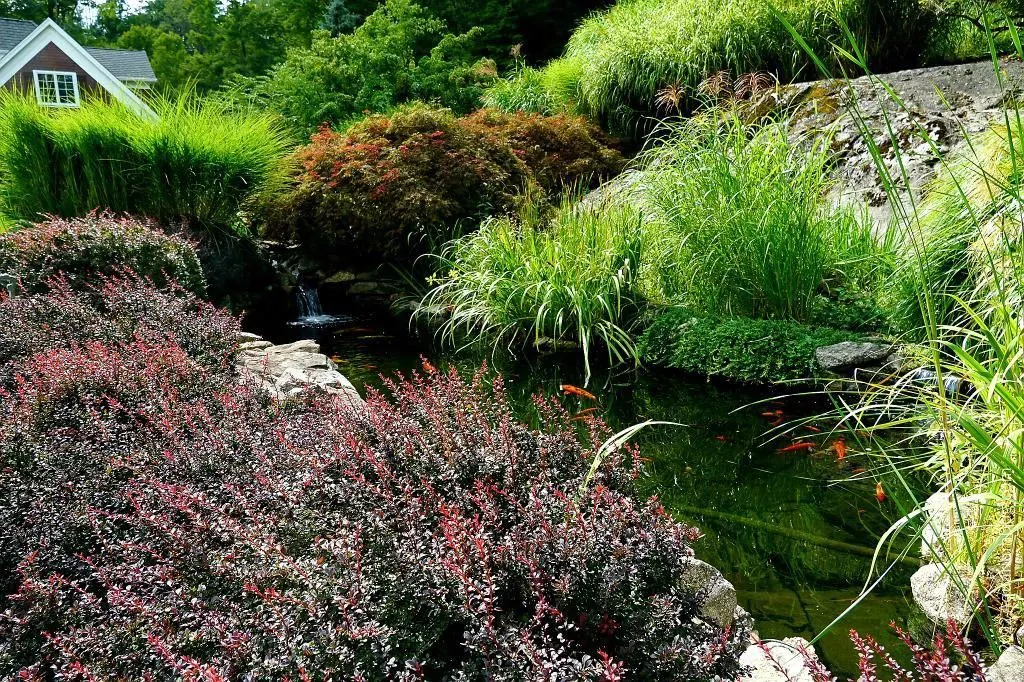
Water gardens
The planted alternative — shallower, gravel-floored, and filtered by plants and bacteria rather than plumbing. Cheaper to build, gentler to own, and the right answer for a great many people.
- 18–24″ deep, heavily planted, 40–70% surface coverage the goal
- Skimmer and biofalls rather than an engineered filter chain
- Forgiving — it fails slowly, not overnight
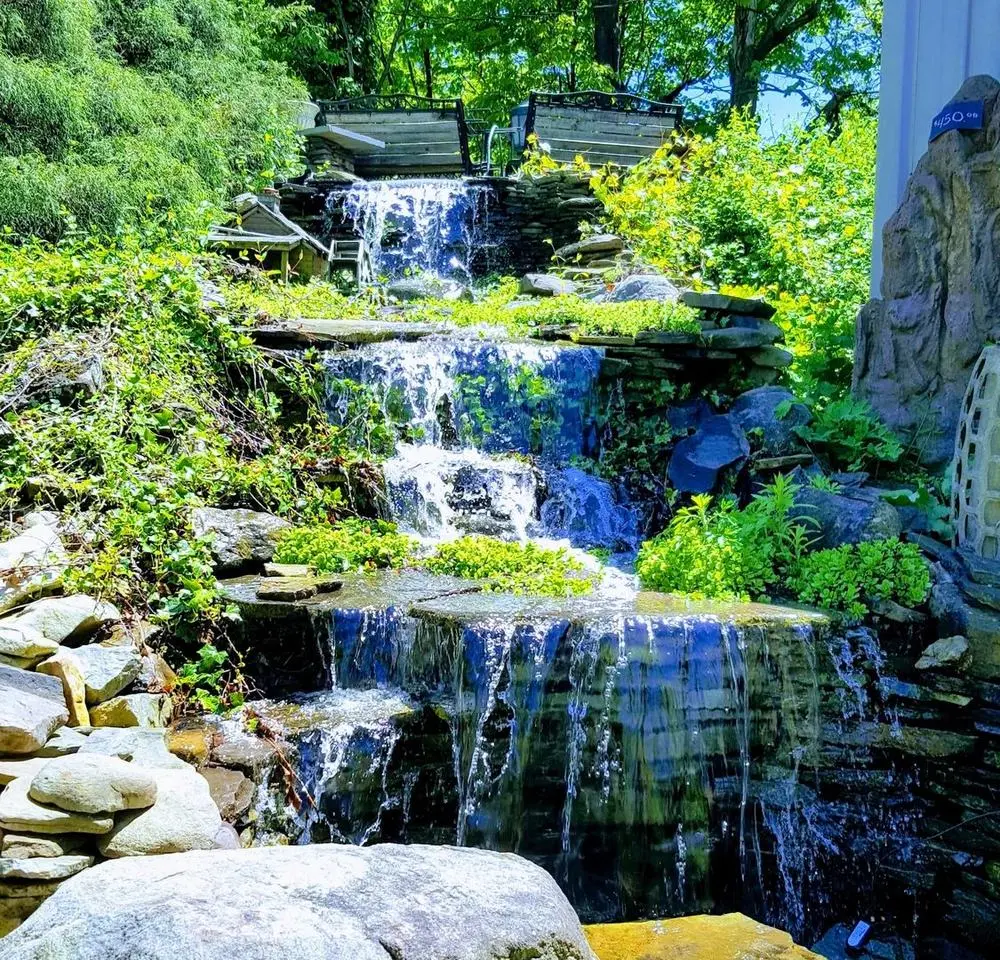
Pondless waterfalls
All the sound and movement of running water, with no open pond. The water disappears into a hidden reservoir under gravel.
- No fish to overwinter, no netting, no ammonia to test
- Safer around small children — no standing open water
- Shut it down in November, restart it in April
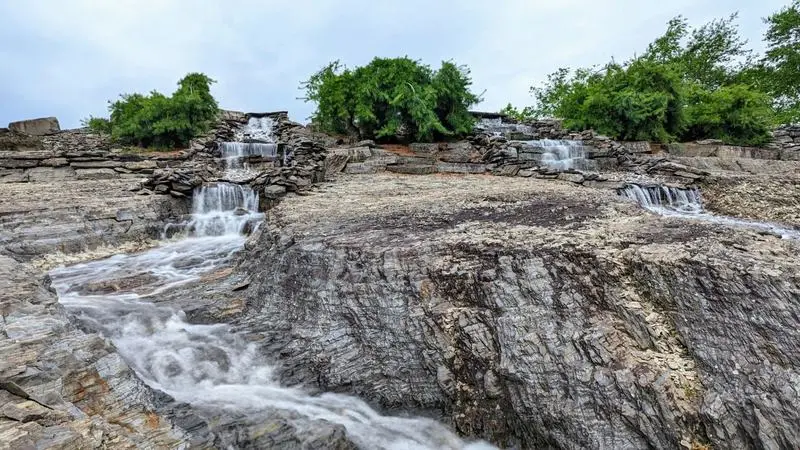
Streams & rills
Water moving across a property rather than sitting in one place. Usually the best possible use of a slope you already have.
- 1–2″ of fall per 10 ft for a stream that reads naturally
- Rills are the formal cousin — straight, hard-edged, weired
- The single biggest thing you can add to a pond’s running cost
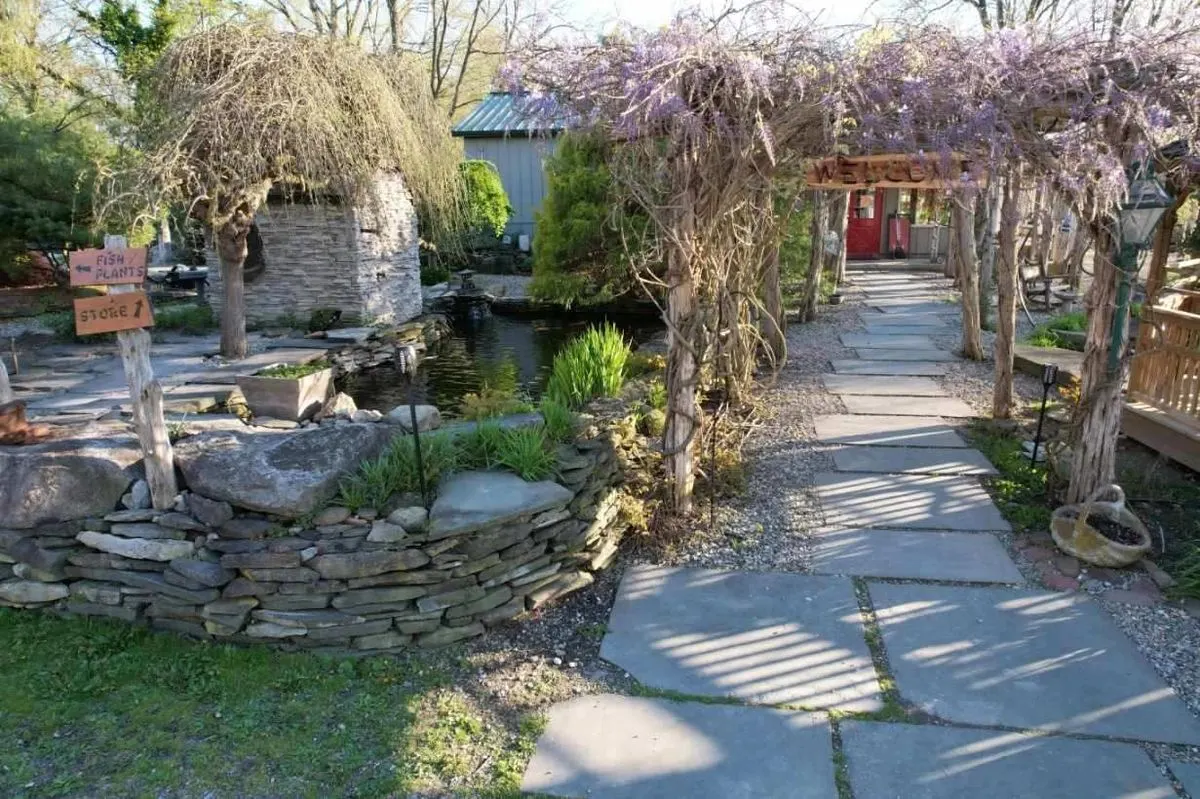
Large-scale work
We have built to 70 ft wide with a 110 ft waterfall run, 35 ft of vertical lift and three 5 hp pumps. Scale is not the problem.
- At this size it is an electrical project as much as a water one
- Pipe diameter and lift decide the running cost forever
- Machine access shapes the design more than the drawing does
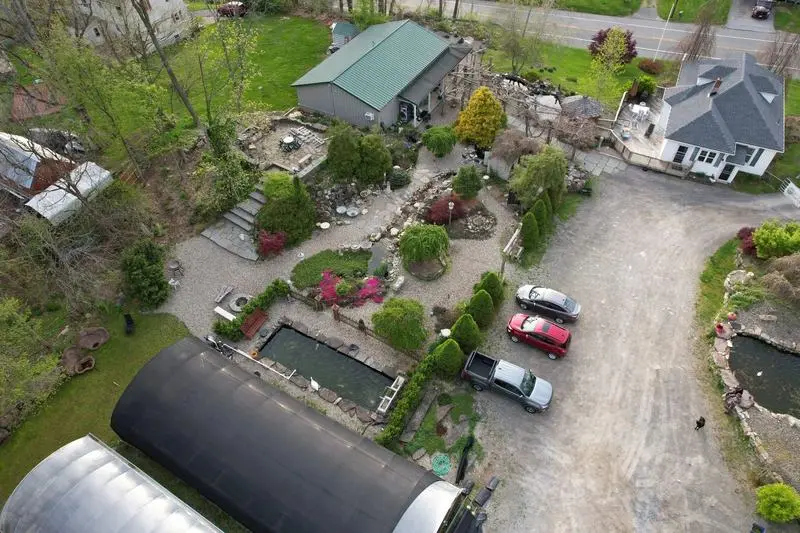
Farm ponds & lakes
Aeration, treatment and management for the larger water around Sussex County. Managing an ecosystem at scale, not running a filter.
- Bottom-diffused aeration — the highest-value fix on most large ponds
- Stratification and winter oxygen, which is how ponds suddenly kill
- Equipment sized for acreage, not for a backyard
Keeping it running
The seasonal work
A pond is not a one-off purchase. It has a calendar, and the calendar is set by water temperature rather than by the date.
Getting the timing wrong is the most common cause of a bad pond year. A clean-out done too late, after the water has warmed and the bacteria have woken up, does more harm than not doing it at all.
| Service | When | What it involves |
|---|---|---|
| Spring opening & clean-out | Late March – mid April | Done before the water warms past the mid-50s, while the fish are still quiet and the bacteria have not started. Leaving it too late is the most common mistake we see. |
| Autumn closing & netting | October – November | Netting before leaf fall rather than after it. Leaves that reach the bottom become next spring's water-quality problem. |
| Winter monitoring | December – February | Keeping a hole open in the ice for gas exchange. A de-icer and an air stone, not a heater — the goal is an opening, not warm water. |
| Maintenance visits | In season | Regular scheduled service through the growing season for ponds that want it. |
When something breaks
Repair & diagnosis
We service what we built and what we did not. Bring it in, or we will come out.
- Pumps — and often it is the intake, not the pump
- Filters and UV — media, seals, lamps, flow
- Aeration — diaphragms, diffusers, winter set-ups
- Leaks — finding where the water actually goes, which is rarely where people think
- Liner repair — before it becomes a rebuild
- Plumbing — valves, unions, and the fittings nobody stocks
The part most people get wrong
Water quality & fish health
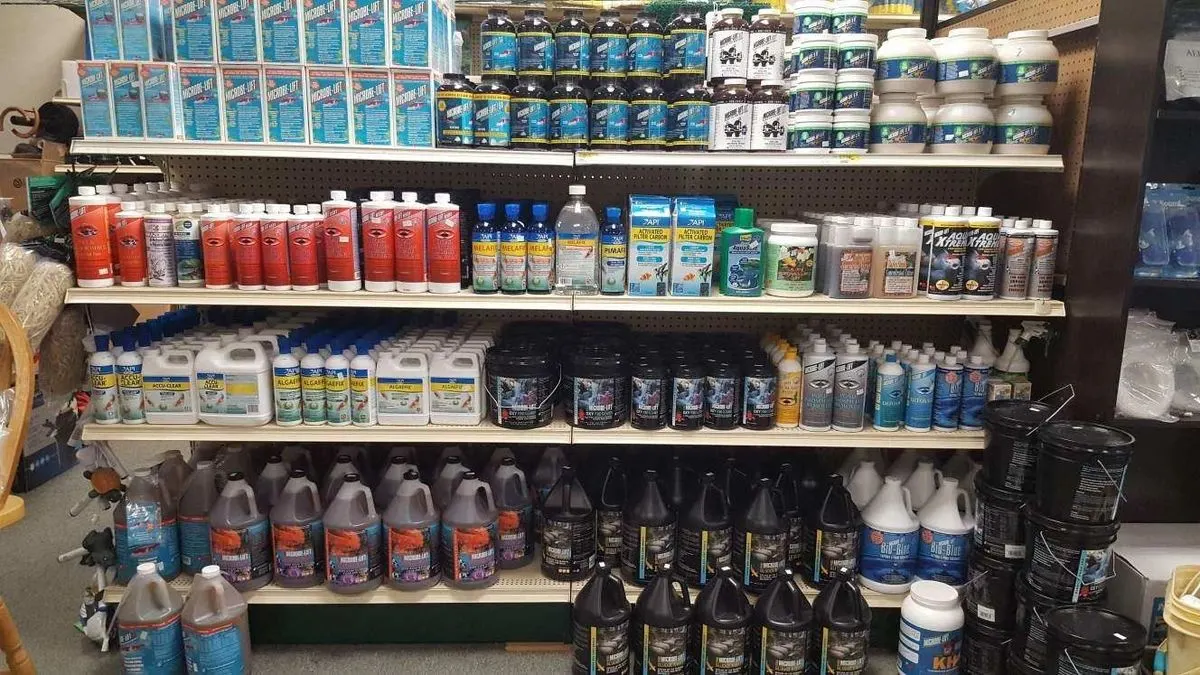
Test the water before you treat the fish. The overwhelming majority of fish health problems are water problems wearing a costume.
Bring us a sample in a clean jar — a jam jar is fine — and we will read the numbers with you: ammonia, nitrite, nitrate, pH, alkalinity, temperature. Ten minutes of that beats a month of guessing at treatments, and it usually costs nothing.
If the answer is that your pond is fine and the fish are just behaving like fish, we will tell you that too.