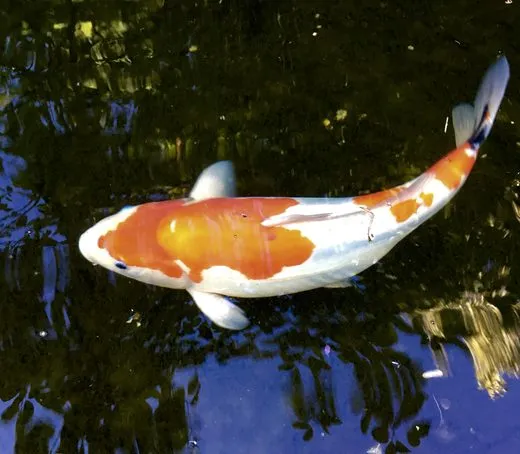
Gosanke
Kohaku 紅白
Red on a pure white ground, and no black anywhere. One black speck and it is something else. The benchmark variety.
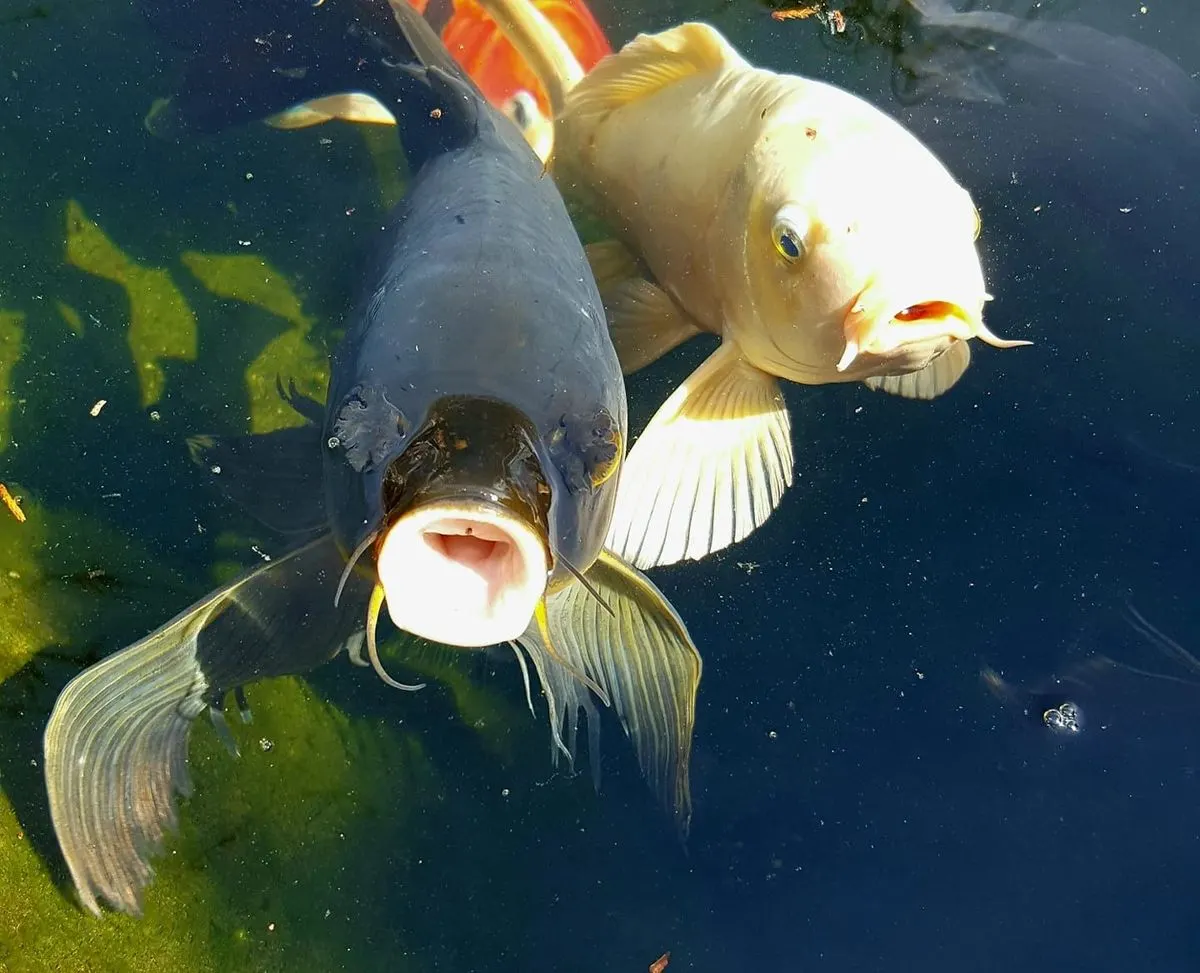
Koi guide
Koi are classified into varieties — hinshu — by colour, pattern and scale type. There are more than a hundred and fifty named ones. You do not need to know them all. You need the dozen you will actually meet, and why one fish costs forty dollars and the one beside it costs four hundred.
The photographs below are reference images, not our stock. They are freely-licensed photographs used to show what each variety looks like — credits at the bottom of the page. For what is actually swimming in our greenhouse this week, call us or come and look.

KoiKnife puts it in your pocket — 33 varieties with their lookalikes, prices from pond grade to show koi, the history of the brocade carp, and feeding by water temperature. Free on the Mac App Store and Google Play, with iPhone and iPad pending App Store review. Made with B&M Aquatics.
Gosanke
These three dominate shows and most serious collections. Between them they account for the large majority of koi sold. Learn to tell them apart and the rest gets much easier.
Red on a pure white ground, and no black anywhere. One black speck and it is something else. The benchmark variety.
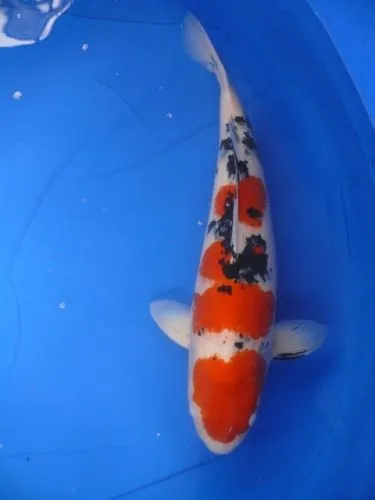
Kohaku plus black — but the black sits above the lateral line and never on the head. A Kohaku wearing punctuation.
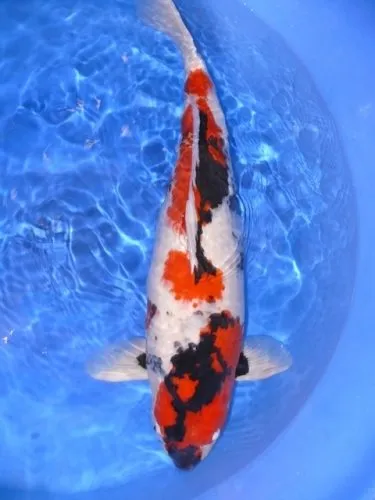
A black fish with red and white on it. The tell: Showa has black on the head and wrapping the body. Sanke does not.
Variety
Everything below is a genuine variety in its own right — a distinct colour and pattern type, not a version of a Gosanke.
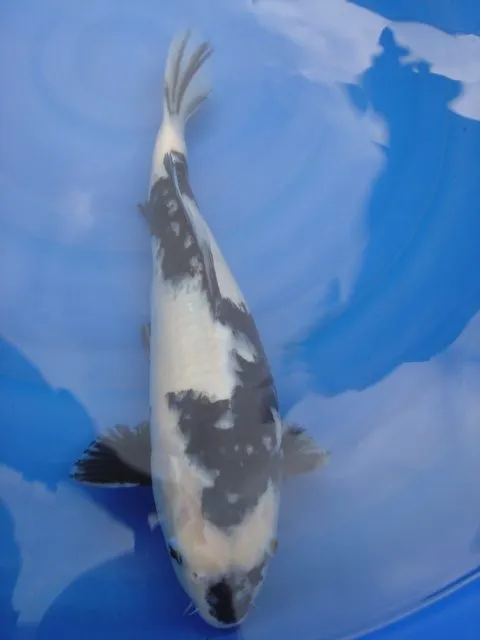
Black base with exactly one other colour wrapping it — white (Shiro), red (Hi) or yellow (Ki). Two colours, not three.
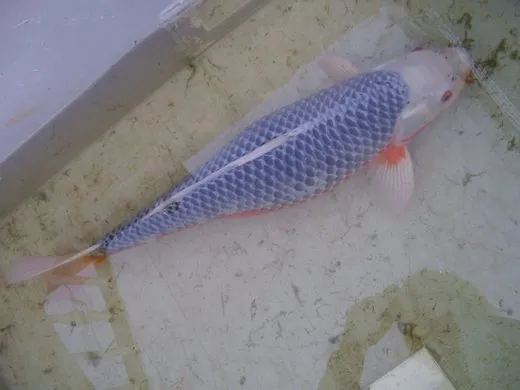
Blue net-patterned back with red running along the flanks and into the fins. The oldest variety — closest to the wild ancestor.
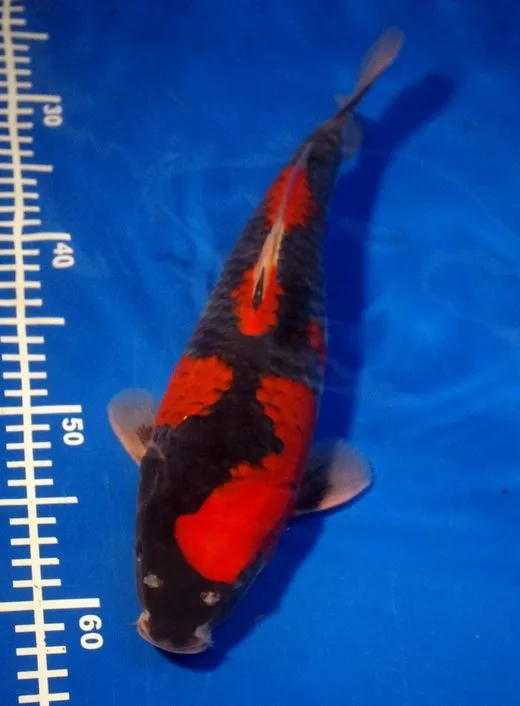
“Five colours” — a Kohaku pattern laid over a reticulated blue-black net. Darkens and lightens with the seasons.
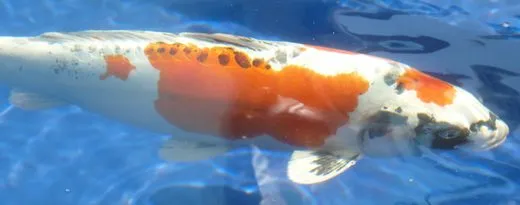
“Peacock” — a metallic body with a pine-cone scale net and red or orange markings over the top.
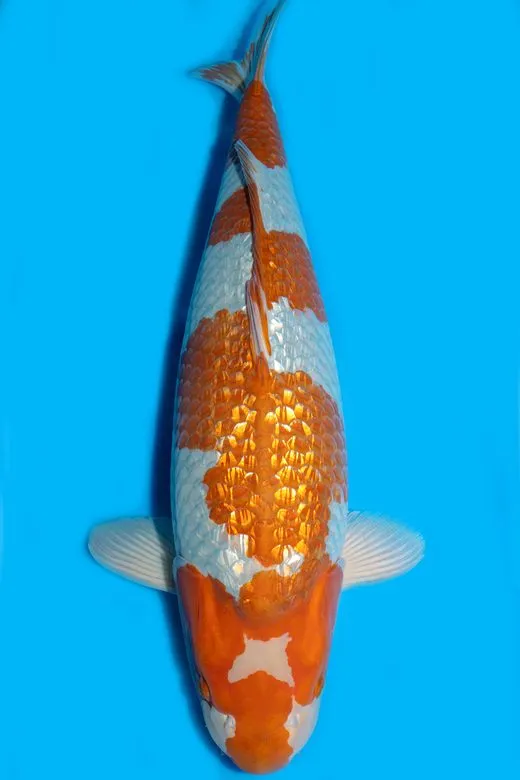
“Autumn leaves on water”. Copper or bronze over blue-grey. Understated, and it looks extraordinary in a planted pond.
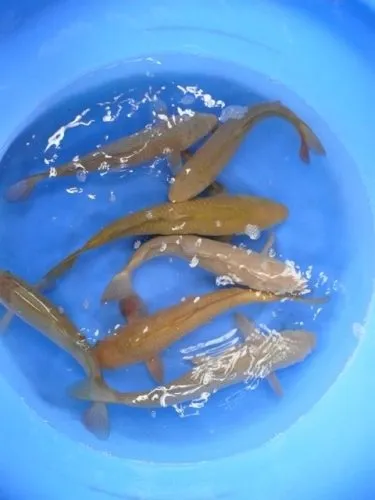
Plain brown or tea-coloured. Deeply unfashionable, the friendliest fish in the pond, usually the first to hand-feed — and it teaches the others to.
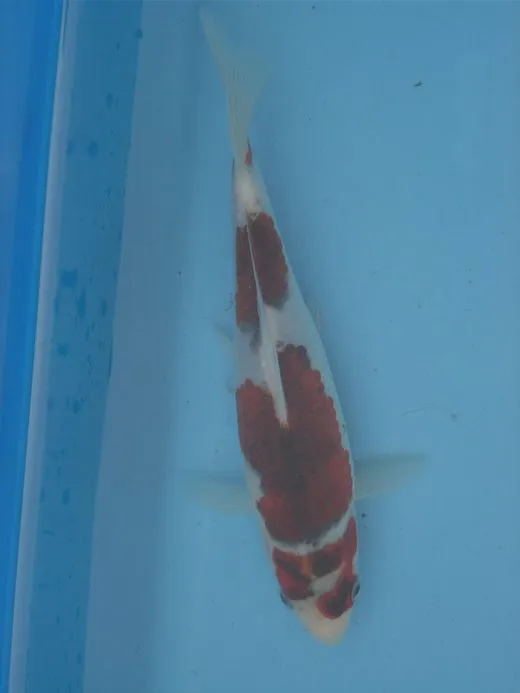
“Grape robe” — the red is overlaid with a darker reticulation so it reads as bunches of grapes. Uncommon and priced accordingly.
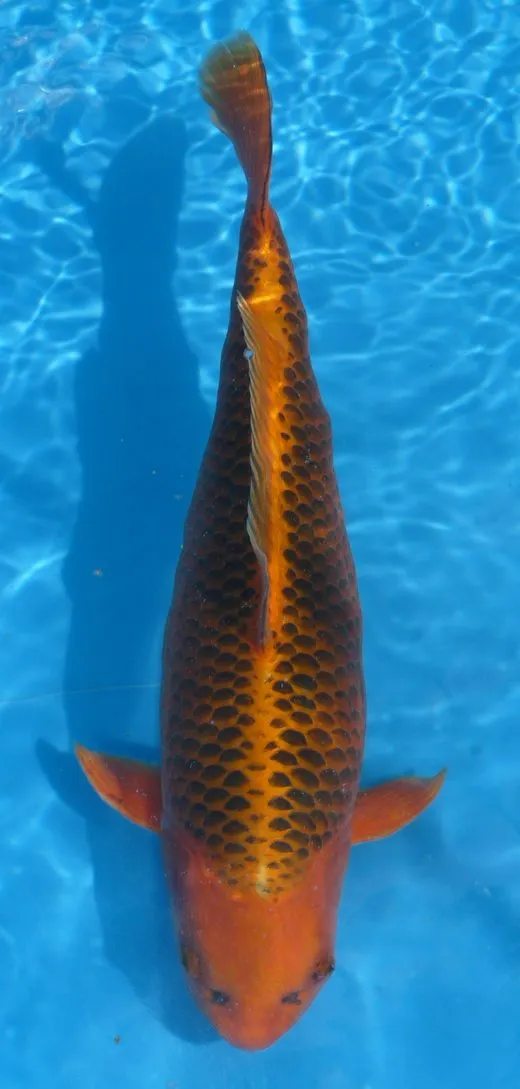
“Pine cone” — each scale is darkened in the centre, giving a pine-cone texture over a solid red base.
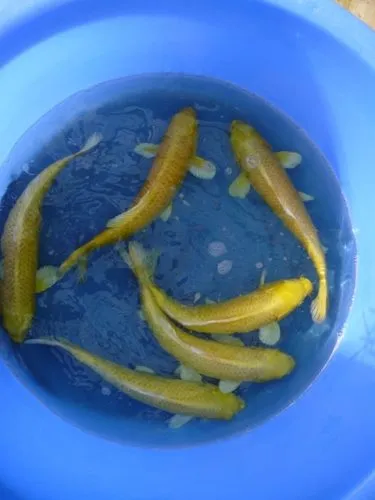
A single solid metallic colour with no pattern at all — here, bright yellow-gold. Ogon is the family; the colour names the fish.
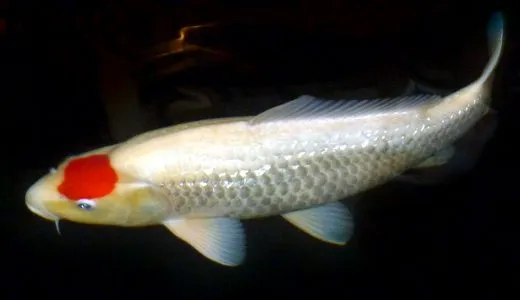
One round red spot on the head and nothing else. If the body carries red too, it is a Maruten, not a Tancho.
Scale type / form
These describe how a fish is built, not what colour it is. Any of them can be combined with almost any variety above — a Gin Rin Kohaku, a Doitsu Showa, a butterfly Ogon.
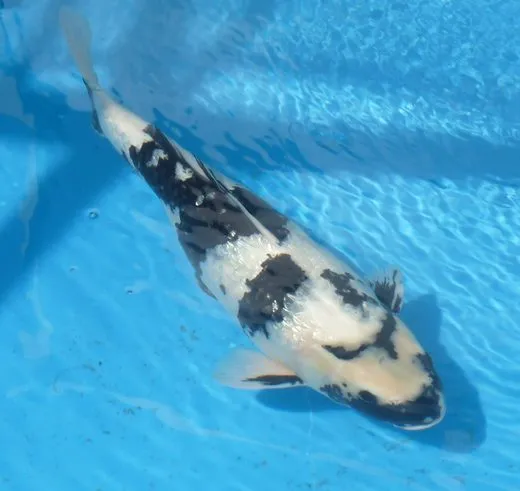
Reflective “diamond” scales that can be added to almost any variety. Judged as its own class at shows.
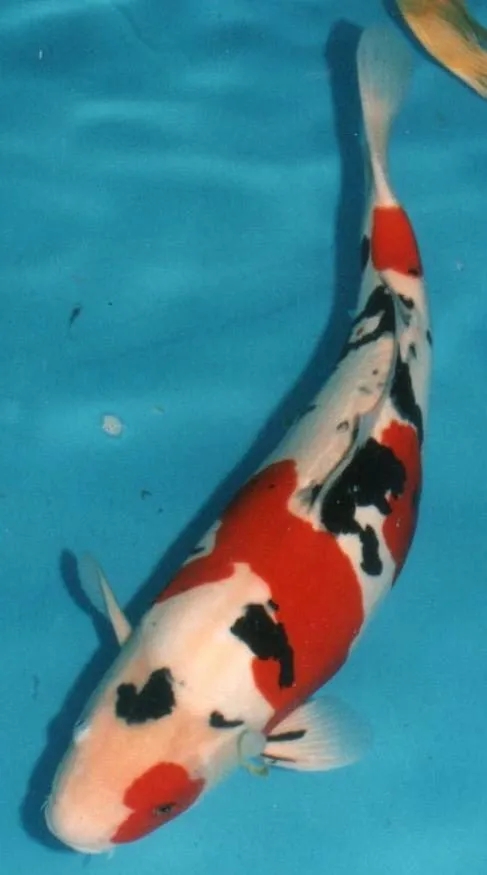
Scaleless, with mirror scale rows along the back and flanks. Pattern edges read sharper without scale texture softening them.
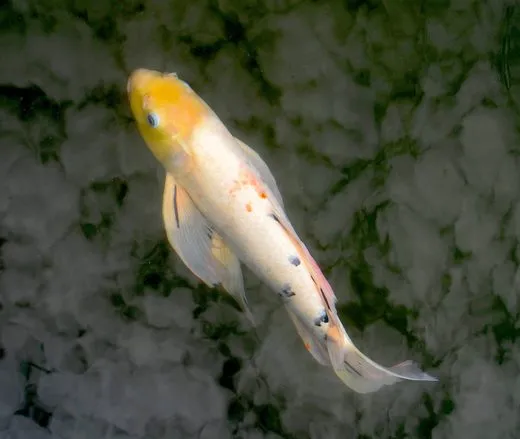
Long trailing fins. A Western favourite, and not a judged variety in Japan — where it is often cheaper rather than dearer.
Money
This is the question we are asked most, and the answer is genuinely interesting.
Below about twelve inches, variety barely moves the price. One national dealer lists thirteen different varieties at exactly the same price in the 12–14″ band. Variety only starts to dominate at selected and show grade.
Japanese breeders cull three or four times a summer. Japan’s own customs authority puts it plainly: under 0.5% of fry survive to autumn. A graded koi carries the cost of the hundreds of siblings that did not make it.
Price scales roughly with the square of length — double the length, expect around four times the price. Past about twenty inches the curve stops being about size and becomes about how few fish get that big while keeping their shape and skin.
Pattern catches your eye; conformation holds value. A well-shaped fish with an ordinary pattern outlives a spectacular pattern on a poor body. The pattern changes as it grows. The body does not.
Bands, not quotes, and deliberately wide — individual fish vary enormously. Ask us what is actually in the greenhouse.
| Grade | 3–5″ | 6–8″ | 9–12″ | 14–18″ | 20″+ |
|---|---|---|---|---|---|
| Pond grade | $9–$28 | $24–$70 | $70–$150 | rare | rare |
| Hobbyist, US domestic | $90–$100 | $130–$200 | $250–$400 | $450–$900 | $900–$3,300 |
| Japanese import | $66–$94 | $135–$200 | ~$440 | $550–$715 | — |
| Breeder-attributed | — | $175–$375 | $225–$1,200 | $375–$1,500 | $6,000–$35,000 |
| Show quality | — | $400–$1,500 | $900–$3,500 | $1,500–$8,000 | $4,000+ |
For scale at the top end: championship koi have sold at auction for the price of a house. That is a different world from a backyard pond — but it is the same fish, four or five culls further down the line.
Choosing
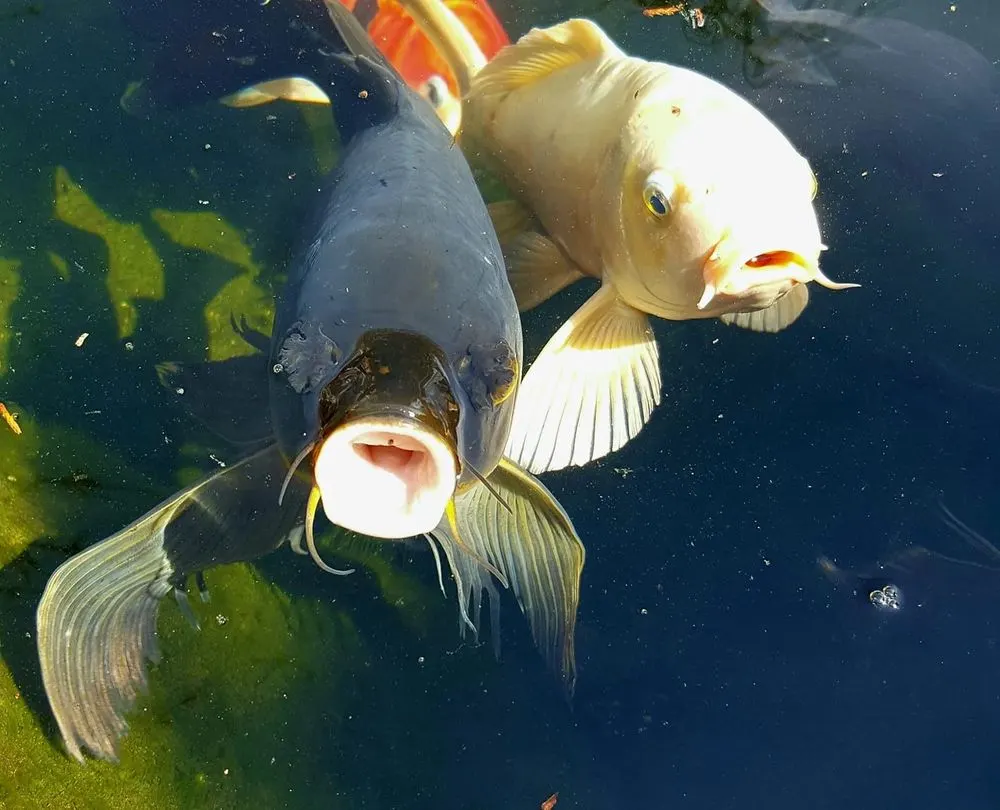
You cannot judge body shape from a photograph and you cannot judge skin from a screen. Bring your pond dimensions and we will tell you honestly what it can carry.
Reference photographs are freely-licensed images from Wikimedia Commons, reproduced unaltered apart from resizing. Each licence was verified against the Commons API on 21 August 2026. None of these are photographs of B&M Aquatics stock.
| Variety | File | Credit | Licence |
|---|---|---|---|
| Kohaku | KohakuLJA.jpg | Nicolas LJA | CC BY-SA 4.0 |
| Taisho Sanke | 4 year old Sanke.jpg | Paulman (talk) | CC BY-SA 3.0 |
| Showa Sanshoku | 6 year old Showa.jpg | Paulman (talk) | CC BY-SA 3.0 |
| Utsurimono | Shiro Utsuri.jpg | Maxikoi at Dutch Wikipedia Later version(s) were uploaded by Erik Baas at nl.wikipedia. (Original text: nl:Overleg gebruiker:Maxikoi) | CC BY-SA 3.0 |
| Asagi | Koi asagi.jpg | no attribution required | Public domain |
| Goshiki | Goshiki moderne.JPG | Ducoussetl | CC BY-SA 4.0 |
| Kujaku | Doitsukujaku.JPG | Maxikoi | CC BY-SA 3.0 |
| Ochiba Shigure | Ginrin Ochiba Shigure nishikigoi Konishi Koi Farm Martin Kammerer ID7397-.jpg | Martin Kammerer | CC BY-SA 4.0 |
| Chagoi | Two year old Chagoi.jpg | Paulman (talk) | CC BY-SA 3.0 |
| Budo Goromo | Budo Goromo.jpg | Maxikoi at Dutch Wikipedia Later version(s) were uploaded by Erik Baas at nl.wikipedia. (Original text: nl:Overleg gebruiker:Maxikoi) | CC BY-SA 3.0 |
| Aka Matsuba | Akamatsuba.JPG | Maxikoi | CC BY-SA 3.0 |
| Yamabuki Ogon | 2 year old Yamabuki.jpg | Paulman (talk) | CC BY-SA 3.0 |
| Tancho | Japan-Koi.jpg | no attribution required | CC0 |
| Kinginrin | Ginrinshiroutsuri.JPG | Maxikoi | CC BY-SA 3.0 |
| Doitsu | Doitsu Sanke.JPG | Benutzer:Fehlwort | CC BY-SA 3.0 |
| Butterfly / longfin | Butterfly Koi.jpg | Dslcards | CC BY-SA 4.0 |


