Schooling
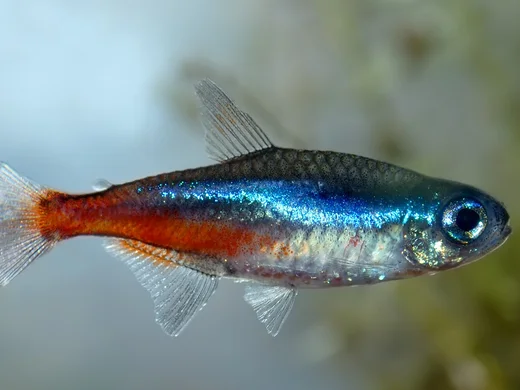
Neon Tetra
The fish everyone pictures. Keep six minimum — alone they hide and fade. A dozen in a planted tank is one of the best-looking things you can own for the money.
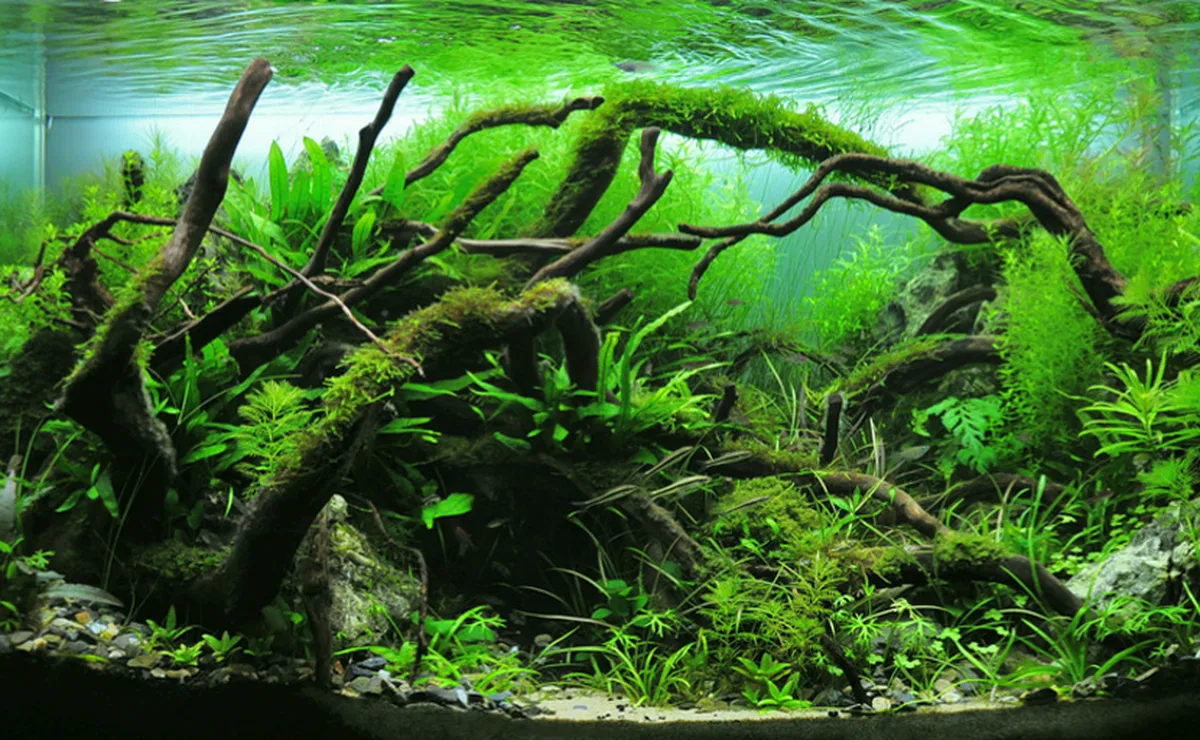
Freshwater aquariums
Half this shop is under a roof. Tanks, fish, live plants from our own greenhouses, and the gear to run it all — open every month of the year, including the four when the pond outside is under ice.
The photographs below are reference images, not our stock. They are freely-licensed pictures showing what each fish and plant looks like — credits at the bottom of the page. For what is actually swimming here this week, call us or come and look.
Start here
Fish produce ammonia, and ammonia is poison. Bacteria in the filter convert it to nitrite, then to harmless nitrate that you remove with water changes. That chain is the nitrogen cycle, and it is the whole hobby in one sentence.
Those bacteria are not in a new tank. They take four to six weeks to establish. Set up Saturday, stocked Sunday, and the fish die of ammonia burns in water that looks perfectly clear.
The fix costs nothing and takes patience. Set the tank up, get it running warm and filtered, and add a pinch of fish food every day or a bottle of ammonia to feed the bacteria you are trying to grow. Test until ammonia and nitrite both read zero and nitrate is climbing. Then buy fish. Bring us a water sample and we will test it free — that is the cheapest insurance in the shop.
The tanks
We stock complete setups and bare tanks from five gallons to a hundred and beyond, and we will tell you honestly which one suits what you actually want to keep.
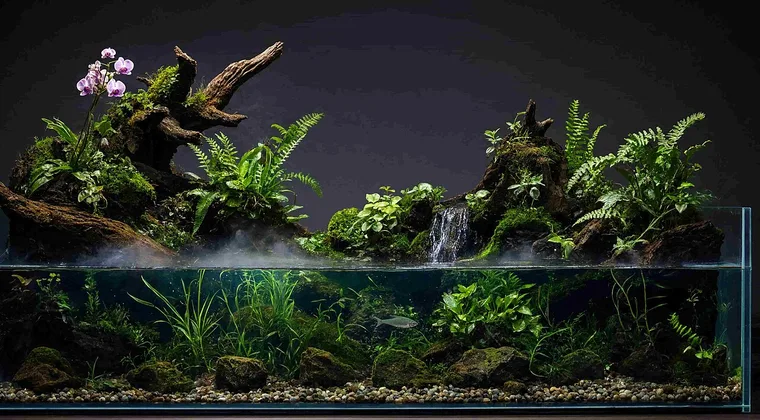
40 gallons and up, planted and hardscaped. A real piece of furniture, and the one people stop and look at. Bring us a photo of the room and we will work out what fits.
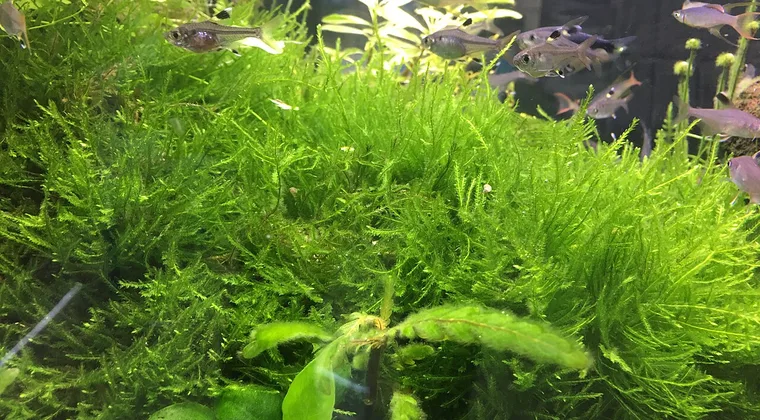
20 to 29 gallons — the size we point most people at. Big enough to be forgiving, small enough to sit on a sideboard and not need a stand built for it.
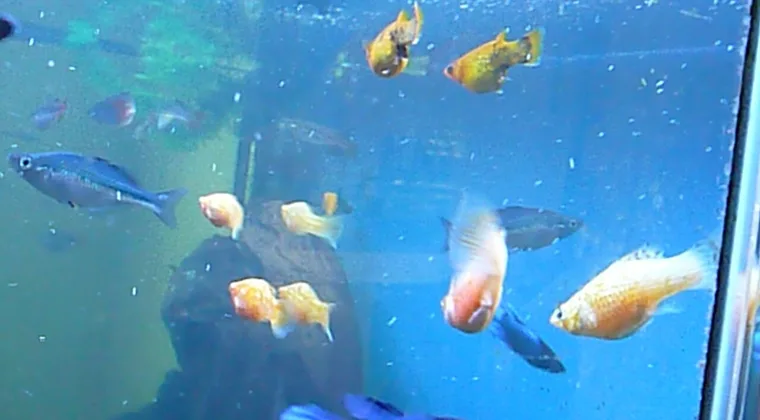
5 to 10 gallons. A betta, a snail, a couple of plants. Complete kits with the light and filter already in the lid — the easiest way to find out whether you like this.
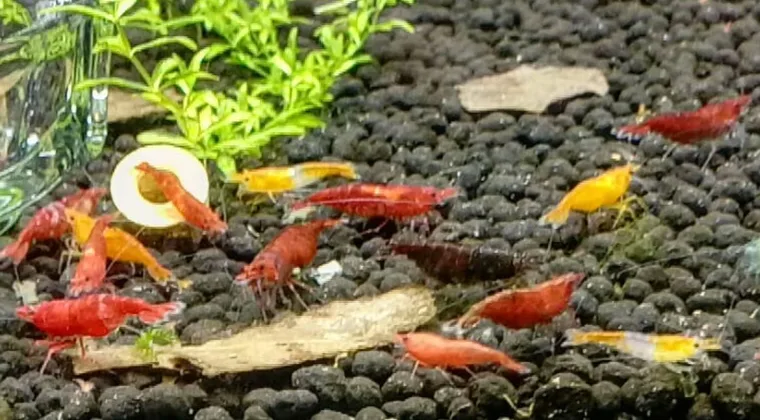
Small, planted, no fish at all. Cheap to run, endlessly watchable, and the tank most likely to turn a sceptical household into a second one.
We set tanks up. If you would rather not wrestle a filled aquarium into place, we deliver locally and set the whole thing running — stand, substrate, filter, heater, light, water. You come back in a fortnight and pick fish.
The fish
These get along, stay small enough for a normal tank, and forgive the mistakes everybody makes in the first year. Prices are typical ranges — ask us what is in.
The fish everyone pictures. Keep six minimum — alone they hide and fade. A dozen in a planted tank is one of the best-looking things you can own for the money.
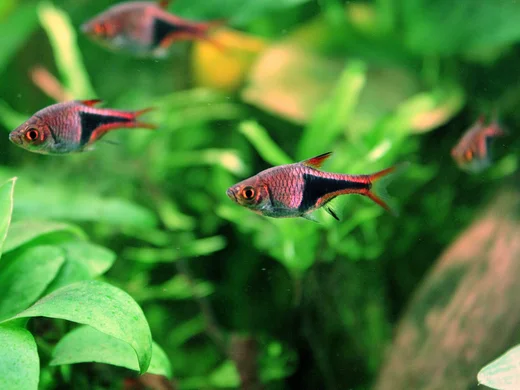
Tougher than a neon and just as pretty — copper body, black wedge. If your water is hard or your hand is heavy, start with these instead.
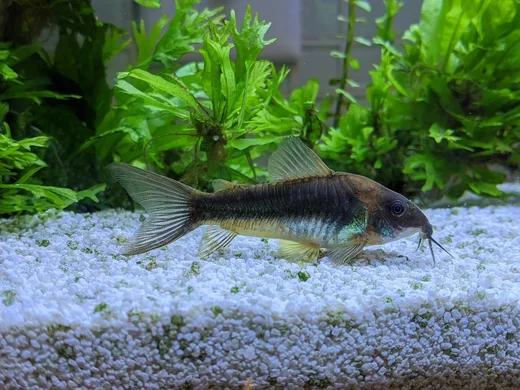
Comic, sociable, and permanently busy. Also a group fish — six or more. They want sand or smooth gravel; sharp gravel wears their barbels away.
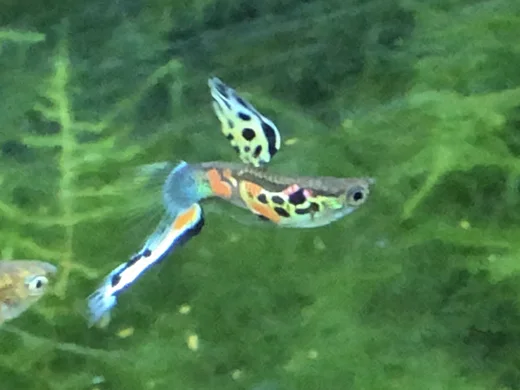
Colour on a budget, and genuinely hard to kill. One warning: they breed relentlessly. Buy all males unless you want a hundred of them by spring.
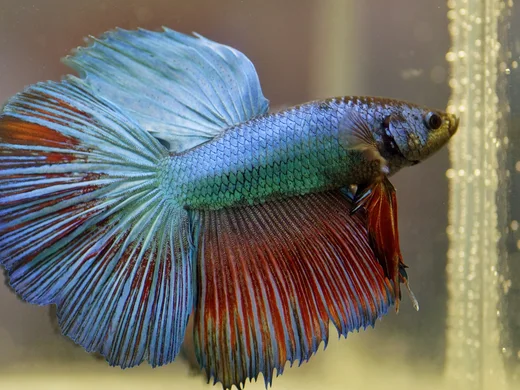
One male per tank, no exceptions. A betta is not a bowl fish — they want five gallons, a heater and a gentle filter, and they live years longer for it.
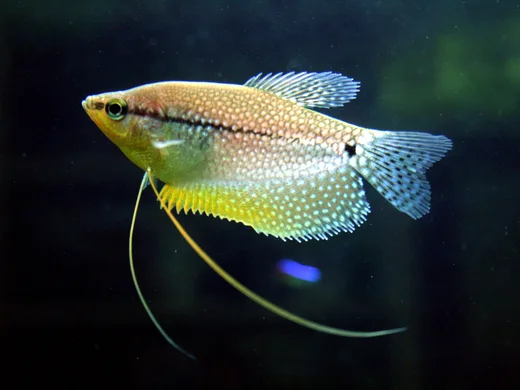
The one to ask for when you want something with presence that still behaves. Peaceful, slow-moving, and spectacular in a planted tank once the males colour up.
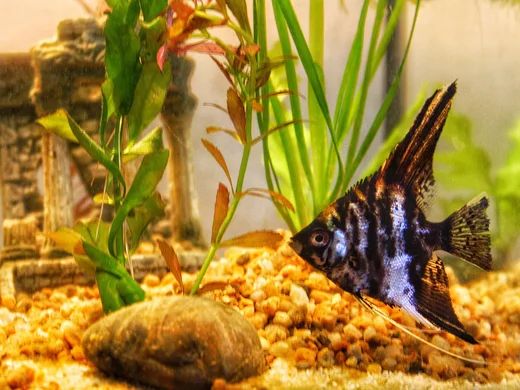
Tall, striking, and a cichlid — which means attitude. They will eat neons once grown. Beautiful fish, but pick the tank around them, not the other way round.
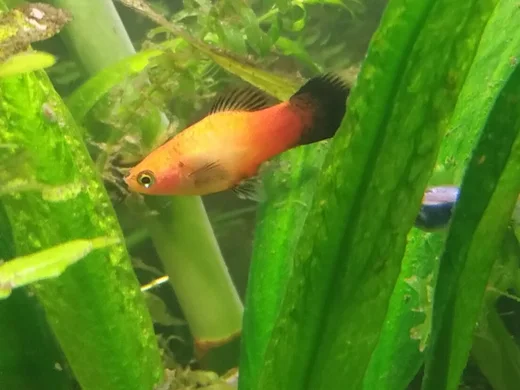
Cheerful, hardy and available in every colour going. Live-bearers, so the same warning as guppies — all one sex unless you want a lot more of them.
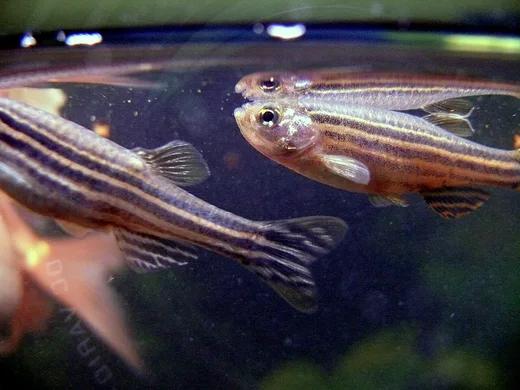
Fast, cheap, and close to indestructible — the fish we hand people whose tank has already killed something. Happy at room temperature, no heater needed.
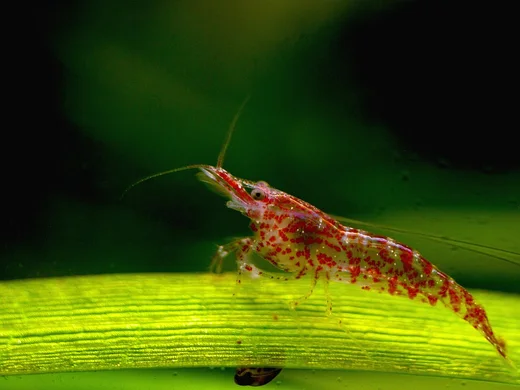
Bright red, an inch long, and they breed readily — buy ten and in a year you have a colony. Keep them away from anything with a mouth big enough.
The cleanup crew
Not decoration. These do a job, and a tank with all three needs noticeably less work from you.
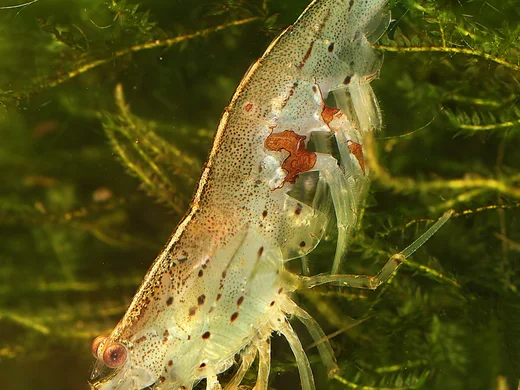
The best algae eater in the hobby, pound for pound, and fascinating to watch. Will not breed in your tank, so the population stays where you put it.
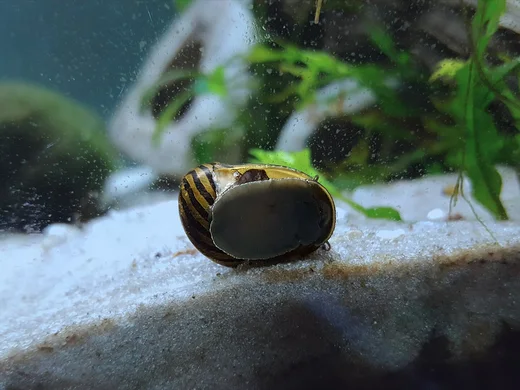
Clears the green film off glass better than anything else. Cannot breed in fresh water — they lay eggs that never hatch, so you will never be overrun.
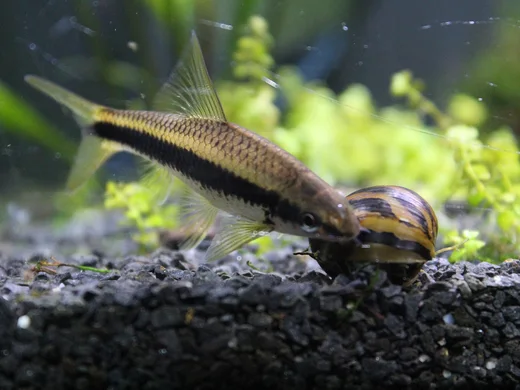
One of the very few things that eats black beard algae. Gets to six inches and stays active, so it needs a real tank — not a nano.
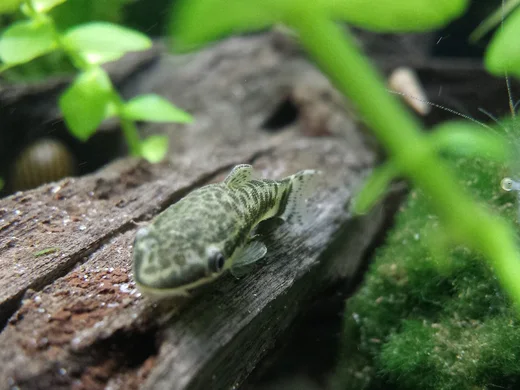
An inch and a half of pure algae grazer, and completely peaceful. Keep them in groups of six, and only in an established tank — they need a mature film to eat.
Live plants
Live plants consume the nitrate your fish produce, starve algae of what it needs, and make everything look like it belongs there. These three are the ones that survive a beginner — no CO₂, no special lighting, no fuss.
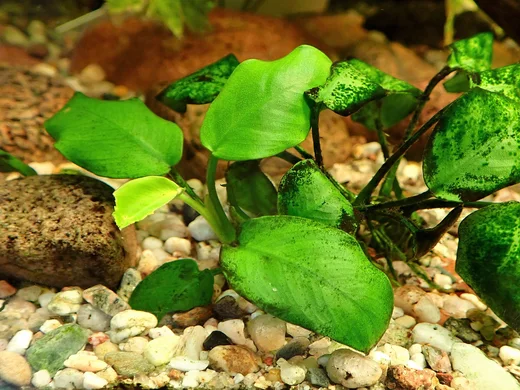
Tie it to a rock or a piece of driftwood — never bury the rhizome, that is the only way to kill it. Slow, tough, and happy in low light.
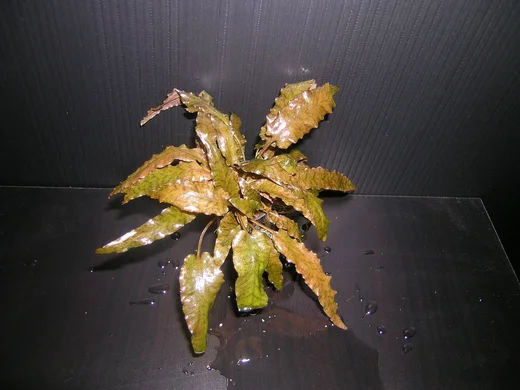
Plant it and leave it alone. It will melt back after a move — that is normal, not death. Leave the roots and it returns thicker than before.
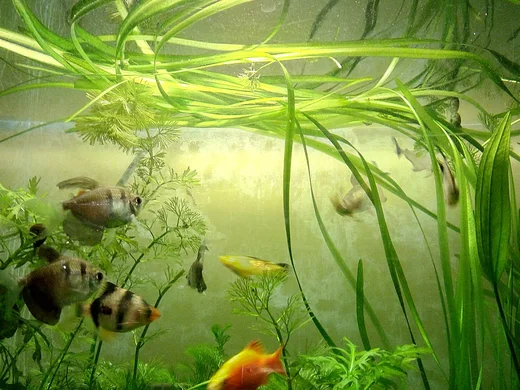
The green curtain along the back wall. Spreads by runners and will fill a tank — which is what you want, until it is not. Easy to thin out.
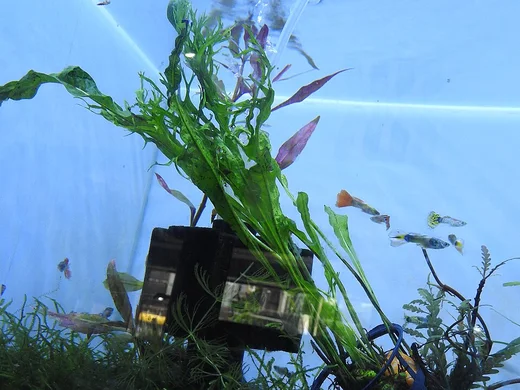
Tie it to wood or rock like anubias — never plant the rhizome in gravel. Grows in almost no light, and makes baby plants on its own leaf tips.
The gear
Everything else is optional. Get these right and the tank mostly runs itself.
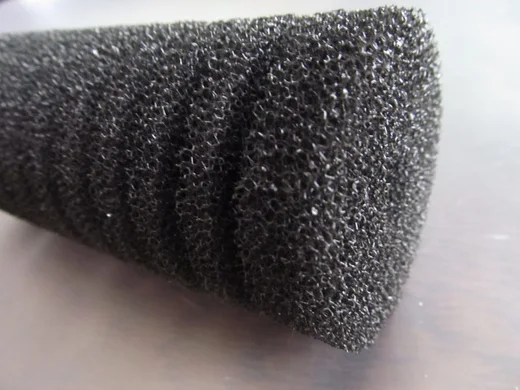
Cheap, silent, and the safest filter for a tank with shrimp or fry — nothing gets sucked in. Runs off an air pump. What we start most small tanks on.
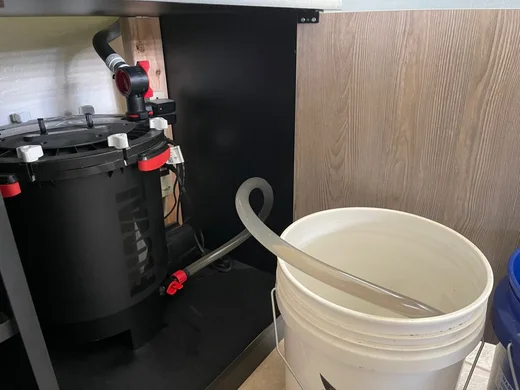
Sits in the cabinet, holds far more media, and keeps a big tank clear with almost no noise. Buy one rated above your tank size, never at it.
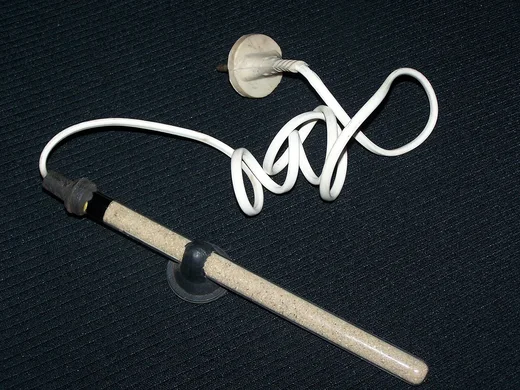
Tropical fish need 76–80°F, steady. In a Sussex County house in January that is not optional. Rule of thumb: 5 watts per gallon, and get a thermometer too.
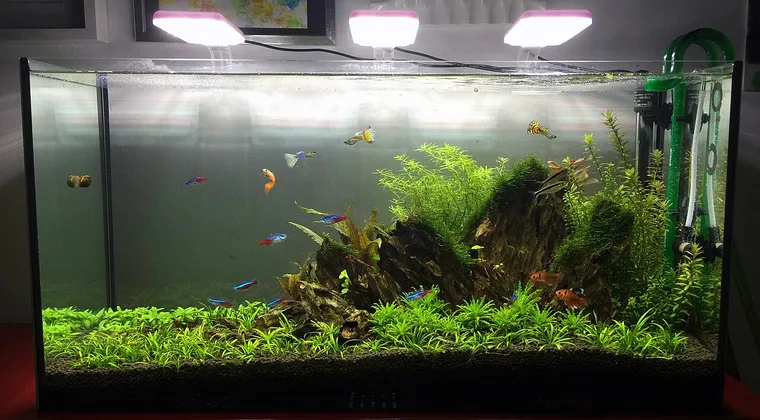
Plants need real light; algae needs too much of it. A timer set to six or seven hours is the single cheapest piece of algae control there is.
Substrate and gravel, dechlorinator, bacterial starter, test kits, foods (flake, pellet, frozen and live), nets, siphons, air pumps, airline, stands, lids, spare impellers and the odd bit of driftwood.
Bowls without heaters. Filters rated exactly to tank size. Six fish on day one. Anything that promises to cycle a tank overnight. We would rather sell you one tank that works than three that do not.
Tank size
This is the most counter-intuitive thing we tell people, and the most useful. A big tank is more forgiving than a small one — more water dilutes every mistake, and temperature and chemistry move slowly instead of swinging.
| Tank | Realistic for | Honest verdict |
|---|---|---|
| 5 gal | One betta, a snail, a plant or two | Fine for exactly that. Nothing else. |
| 10 gal | A school of small tetras or guppies | Workable, but unforgiving. Test often. |
| 20 gal long | Tetras + corydoras + a centrepiece | The sweet spot. Where we point most people. |
| 29–40 gal | Angelfish, gouramis, a real community | Easiest of the lot to keep stable. |
A 20-gallon long beats a 20-gallon tall every time. Same water, more floor and more surface area — which means more oxygen exchange and more room for the fish that actually use the bottom.
When it goes wrong
Milky white, usually days after setup. It is a bacterial bloom and it is harmless — the tank is doing exactly what it should. Do not change anything. It clears itself in a week.
Too much light, too much food, or both. Cut the lights to six hours a day on a timer, feed less, add plants and a cleanup crew. Chemicals treat the symptom.
Ich. Extremely common, extremely treatable, and usually a temperature crash rather than bad luck. Raise the temperature slowly and treat — ask us which one.
Nine times out of ten this is the nitrogen cycle, not the fish. Bring us a water sample before buying anything else. We test it free and it usually answers the question in two minutes.
Our guarantee
Three-day replacement on any fish we sell you. If a fish dies within three days of going home, bring it back with a sample of your water and we will replace it.
The water sample is not a formality — it is how we find out why, so the replacement does not go the same way. And if we think your tank is not ready for what you are asking for, we will tell you, even when that means not selling you a fish today.
Photo credits
Every photograph on this page is freely licensed and used to show what a species looks like. None of them are photographs of our own stock.
Hero aquascape — Netha Hussain, CC0, Commons. · Neon tetra — André Karwath aka Aka, CC BY-SA 2.5, Commons. · Harlequin rasbora — Juan R. Lascorz, CC BY-SA 3.0, Commons. · Corydoras — Andrew Keller, CC0, Commons. · Fancy guppy — Holger Krisp, CC BY 3.0, Commons. · Betta — ivabalk https://pixabay.com/pt/users/ivabalk-782511/, CC0, Commons. · Pearl gourami — Kennyannydenny, CC BY-SA 3.0, Commons. · Angelfish — James St. John, CC BY 2.0, Commons. · Platy — Graf zu Pappenheim, CC BY-SA 4.0, Commons. · Zebra danio — Pogrebnoj-Alexandroff, CC BY-SA 3.0, Commons. · Cherry shrimp — Sean Murray from Edinburgh, Scotland, CC BY-SA 2.0, Commons. · Amano shrimp — Richard Bartz, Munich Makro Freak, CC BY-SA 2.5, Commons. · Nerite snail — Evan Baldonado, CC BY 4.0, Commons. · Siamese algae eater — aleander2137, CC BY-SA 4.0, Commons. · Otocinclus — Evan Baldonado, CC BY 4.0, Commons. · Anubias nana — Abhik.Mazumdar.73, CC BY 4.0, Commons. · Java fern — Yercaud-elango, CC BY 4.0, Commons. · Cryptocoryne — photo: S. Tanaka, Public domain, Commons. · Vallisneria — Damitr, CC BY-SA 4.0, Commons. · Showpiece tank — Dileepkumardr, CC0, Commons. · Family tank — Ranjith-chemmad, CC BY-SA 4.0, Commons. · Desk tank — No machine-readable author provided. Epastore assume, CC BY-SA 3.0, Commons. · Shrimp tank — Hamid.Moghadam, CC BY-SA 4.0, Commons. · LED lighting — Gustavo Sivila, CC BY-SA 4.0, Commons. · Sponge filter — Ofkun, CC BY-SA 4.0, Commons. · Canister filter — Fish Tank Society, CC BY-SA 4.0, Commons. · Heater — Ewkaa, CC BY-SA 3.0, Commons.


